

One thing all emergency managers, business continuity planners, and other crisis management and incident response practitioners could tell you is that it isn’t an easy gig.
That’s not to say these professionals don’t find their jobs rewarding. In fact, it’s the exact opposite. So many enjoy what they do and seeing the significant impacts their daily work has on the people around them, especially in times of crisis.
We’re fortunate to have practitioners on the Veoci team to learn from and to help our customers. Their experiences in the field are also more than worth highlighting.
Now, we’re going to take a look at another veteran practitioner on our team: Mark Demski. As the Government Vertical Sales Team Leader at Veoci, he leverages decades of experience as a responder and an emergency manager to deliver solutions that make a difference.
Below is an account of Mark’s career, the lessons he’s learned, and how he envisions the future of emergency management and response.
Mark’s Career
Public safety is one of the many pieces that wraps into emergency management, so it’s fitting that some EM practitioners have their roots in public safety, including Mark. He recalls his mother and teachers saying he was more drawn to fire engines or ambulances driving down the street than what was happening in the classroom.
When many of us would be starting our first part-time jobs, Mark started working in public safety; at the age of 16, he completed training to become a firefighter and EMT with the Bel Air Volunteer Fire Company in Maryland. Even at his young age, he could understand the impact these roles—EMS, firefighters, police—had in the community. He saw an opportunity to help and pay it forward, so he took it.
Later on, at 21, he joined the Harford County Sheriff’s Department as a Deputy Sheriff. Five years later, Mark joined the Baltimore County Fire Department and hit the road as a paramedic and firefighter once again. During this time, he completed several specialized trainings to become a nationally registered paramedic and a fire officer. He also worked in the training division as an instructor, helping others become public safety officials and emergency responders.
Recently, Mark celebrated 37 years as a nationally registered paramedic and almost 50 years of experience as an EMT, a testament to his continued dedication to the public. He has countless stories from this part of his career, both good and bad. A few stick out more than others, including the two babies he delivered as a paramedic, one of which was named after him and his partner at the time.

During this time, Mark also got his first glimpse into the world of emergency management. He served dually as an assistant in the Baltimore County EOC. He was a “runner,” a position many EOCs have either dropped or adapted in some way by 2019 thanks to technology. He moved notes between different people in the EOC, alerting them to incoming developments. To this day, he’s still on the ball, often keeping the Veoci team in the loop about major weather events as they happen around the country.
This runner position soon translated to a full-time position in the Baltimore County Office of Homeland Security & Emergency Management, where he worked as an emergency management specialist. By the time Mark left the organization, he was established as a deputy director. He also gained his accreditation as a Certified Emergency Manager (CEM) in 2009 and was appointed to the FEMA IPAWS subcommittee.
Mark retired from Baltimore County in 2011 and came to work for the Maryland Emergency Management Agency (MEMA) as the Assistant Director of Operations, where his primary duty was to act as the EOC Manager.
Through all of these roles and decades of experience, Mark certainly learned what works and what doesn’t, and he still uses those principles today in his approach to emergency management.
Tips for Emergency Managers
Being a Flexible Gumby
Emergencies are inherently sudden or immediate. There’s no way to predict an emergency; even when meteorologists see a hurricane barrelling through the Atlantic Ocean towards the Caribbean or Southern US, they can’t say where or when it will land or the destruction it will cause (definitively, at least).
Every emergency is like a good pitcher. A good pitcher will have the staples, like a fastball and curveball, in addition to other tools—like a changeup or slider—that force batters to respond uniquely to the pitcher’s approach.
Mark sees emergency managers as batters and emergencies as pitchers. An emergency manager can create a plan for the “guarantees” of a hurricane, like strong winds and heavy rain. However, emergencies often have new, unforeseen circumstances such as torrential rains that cause sudden flooding and evacuations. or a storm moving much slower than models predicted.
During his time in the EOC, Mark says the term “flexible Gumby” was often thrown around. For him, being a flexible Gumby is a requirement for every emergency manager—and his experiences prove this hunch true.
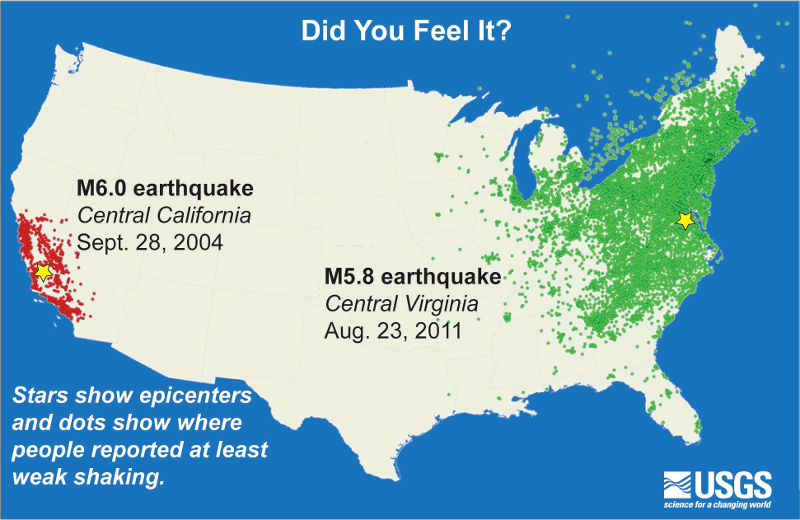
During his time working at both the state and county EOCs, Mark and his surrounding teams responded to extreme events in the region, including Hurricane Isabel, the 2011 Virginia Earthquake (the strongest quake east of the Rocky Mountains since 1944), and three blizzards in one winter season. One thing was consistent throughout each response: not everything went according to plan.
Adaptability—or being a flexible Gumby—is a key skill for any emergency management professionals.
Building Relationships
At the government level, each response will have a similar roster. It’s why Mark advocates for building relationships with the other players.
These relationships provide a precursory understanding of each person’s capabilities, reach, and resources. Having this knowledge on hand is, effectively, an act of preparedness.
It’s also information that can inform your plans as an emergency manager. The goal of your plans is to streamline responses—to make them as efficient as possible. If there’s a perceived or possible roadblock, it’s best to build around it. It’s what makes these relationships before emergencies happen so paramount. If something is needed, the most accessible source should be outlined in a plan.
Mark’s other personal emergency management tenet also comes into play here. If power suddenly goes out in an emergency, knowing which organizations can provide spare ambulances for transporting medically dependent populations in the back of your head can save valuable time and ensure the safety and comfort of those populations.
The skills and lessons Mark has picked up over the decades are invaluable and worth noting. He’s seen it all, from the early days of the practice to the thorough, thought-out, and prepared departments many states and organizations employ today. So, after seeing all of this development, where does he see the field going?
Where is Emergency Management Going?
When Mark first started in EOC, he was a runner. Nowadays, we’re a far cry from that, and Mark—alongside other practitioners—are happy with technology and how it further enables the EOC.
Here’s a fact from Mark that visualizes the impact digital platforms have on emergency management: Hurricane Isabel generated two full file cabinets of reports and documentation in Mark’s EOC alone. Now, a team utilizing a digital platform can create thousands of reports as they progress and ditch those papers and file cabinets altogether.
Technology also cuts out the minutiae of communication and processes. Mark’s first role in the EOC can now be accomplished through a simple message stream or one-click-to-send notifications. While ease is certainly a plus here, the most prominent benefit is the time that practitioners and other players in the EOC get back and the full attention they can give to pressing matters. Ultimately, the EOC team builds a stronger sense of situational awareness and operates in a much more streamlined manner.
Mark says this is only scratching the surface. Who knows what tech will debut in the next few years and how minds will be adapting it to emergency management. The dramatic changes in the EOC Mark witnessed will pale in comparison to what shifts the tech of the next few years will deliver. The final page here should convey a particular message: it’s not how much time or paper gets saved, it’s the impact the team makes, in times of crisis, by using the tool.
If you’d like to learn more about Mark, check out his LinkedIn profile here. Or, if you’d like to get in touch, you can send him an email by clicking here.
Learn more about Veoci’s emergency management solutions.
Image: olivia hutcherson via Unsplash.com